


Long-term cohort studies offer valuable opportunities to monitor participants' health over time. Through regular assessment waves and additional studies, researchers collect a wide range of health data and measurements. Sometimes, participation can also lead to unexpected health findings that might otherwise have gone unnoticed. For Lifelines participant Joop (88), this proved to be life-changing.
“In that sense, Lifelines saved my life”
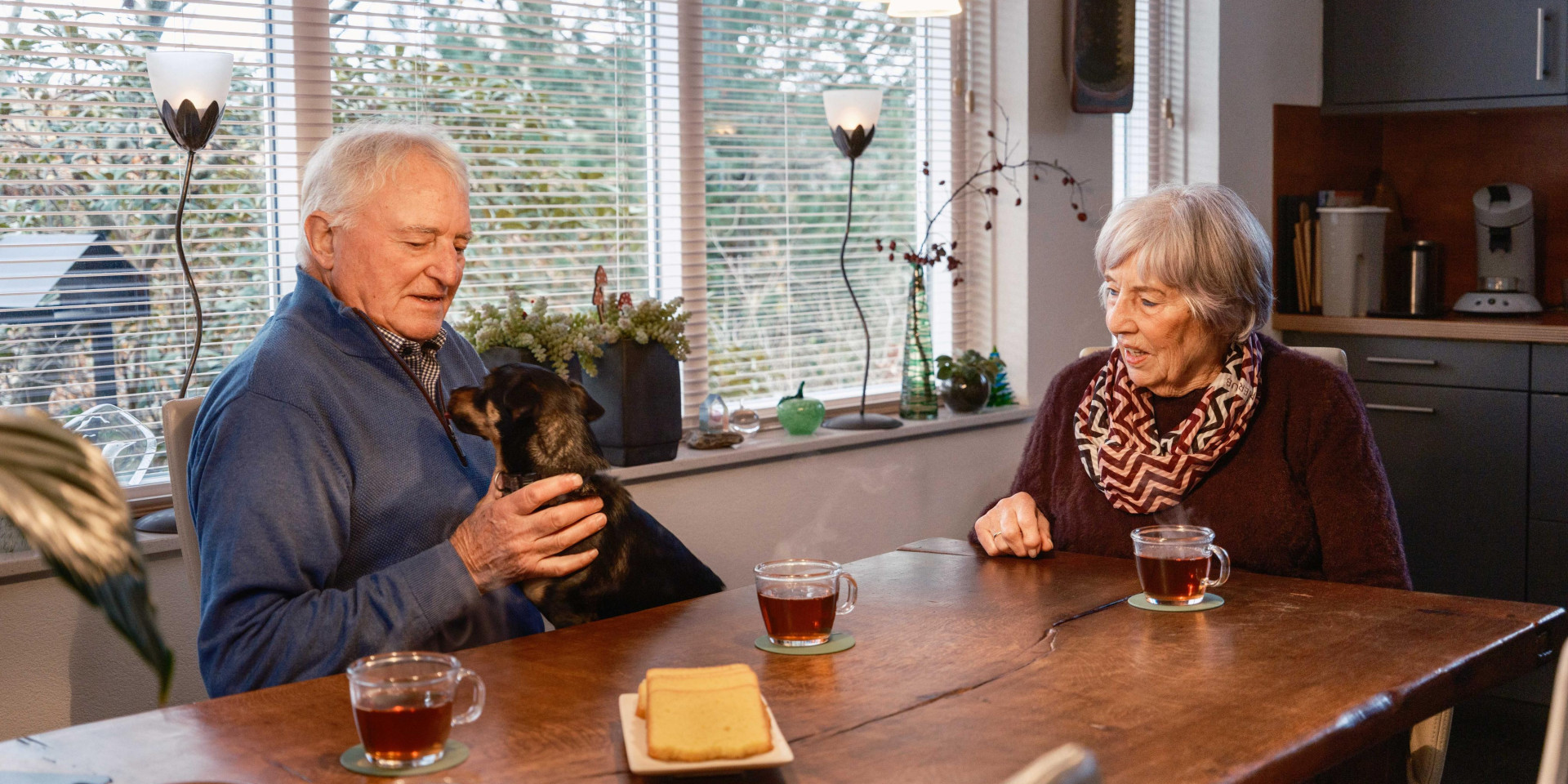
We’re in Assen, at the home of Lifelines participant Joop (88), who lives with his wife Kitty and their dog Nouschka. Joop is an active man who enjoys walking his dog and spending time outdoors. Nature has always played an important role in his life. In 2022, an abnormality was detected during ImaLife, an additional Lifelines study involving a CT scan. Further examinations revealed that Joop had kidney cancer.
A life surrounded by nature and family
Joop studied horticulture at the G.A. van Swieten school in Frederiksoord, a small school known for its high standards. “My life revolves around everything green and everything that lives in it,” he says. “It doesn't matter where we are. As long as there's nature, I'm happy.”
His love of the outdoors is visible throughout his home. Next to the house stands an old blue-green camper van in which Joop and Kitty have travelled for years. Their garden is filled with stones collected during their holidays, each one holding a special memory.
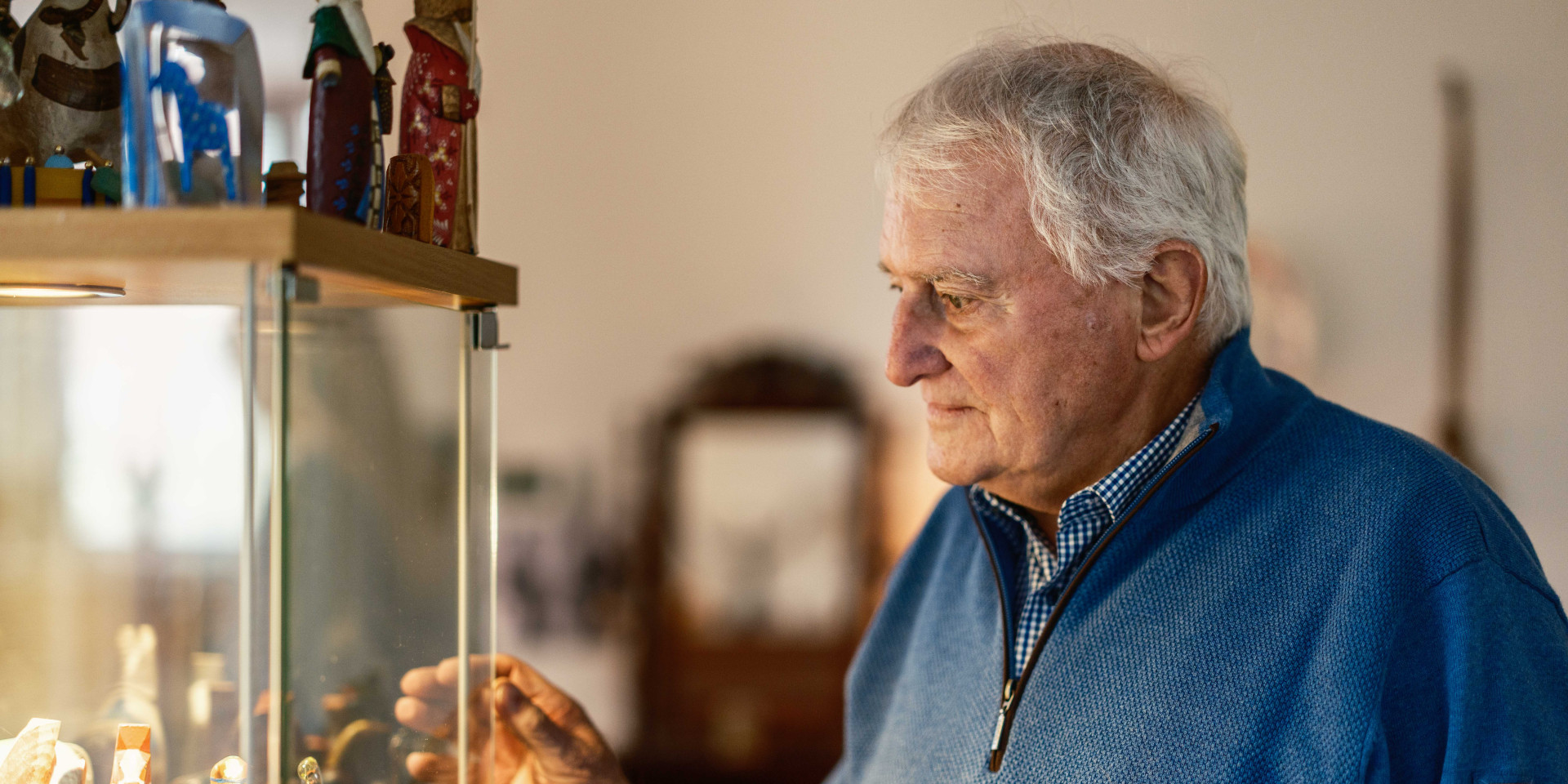
Sweden has a particularly special place in their hearts. “Even the Swedes say we know Sweden better than they do.” In his home, Joop proudly shows his collection of 96 traditional Swedish wooden horses. “Whenever I pick one up, I know exactly where I got it from.”
Family is just as important. Joop and Kitty have five daughters, eleven grandchildren and thirteen great-grandchildren. “If you count everyone who married into the family, there are 42 of us,” Joop says with a smile. Despite his age, he still feels healthy, active and rarely finds himself bored.
An additional study with unexpected consequences
In April 2022, Joop and Kitty participated in ImaLife, an additional study within Lifelines focusing on heart and lung health. Having been Lifelines participants from the very beginning, taking part felt natural to them. “You learn something about yourself, but you also help others.”
The arrangement was simple: if nothing unusual was found, they wouldn't hear anything. If something did require attention, their GP would contact them.
When Joop receives a call from his doctor, it turns out that something has been detected. It is probably harmless, but further investigation is needed. He is referred to a urologist, where another CT scan reveals kidney cancer in his right kidney. Fortunately, the tumour is contained within the kidney and has not spread.
“I was doing everything as usual and noticed nothing”
The diagnosis hits hard, particularly because of Joop's family history. His eldest brother had died from the same type of cancer five years earlier. By the time his brother's condition was diagnosed, the cancer had already spread.
For Joop, the situation is different. He has no symptoms and feels completely healthy. “I was doing everything as usual,” he recalls. “I didn't notice a thing.”
When the urologist explains that his kidney needs to be removed, Joop doesn't hesitate. “Do it,” he says. Despite both brothers having developed the same type of cancer, Joop explains that his cancer was not hereditary.
A little kidney to remember
From the very first appointment, Joop is impressed by how quickly and carefully everything is arranged. His consultations take place at Wilhelmina Hospital in Assen, followed by surgery at Scheper Hospital. The doctors and nurses make him feel reassured and well cared for.
“It felt like being wrapped in a warm blanket,” he says. “I never really felt like a cancer patient. There was hardly any time for that.”
The operation goes well, and Joop is soon able to return home. His granddaughter crochets a small kidney for him, affectionately nicknamed his vergeet-me-niertje, a playful Dutch reference to a forget-me-not and the word for kidney. The little keepsake now travels with Joop and Kitty in their camper van.

Living with one kidney
After surgery, Joop undergoes regular follow-up examinations. He is scheduled for annual CT scans for up to five years. So far, three scans have shown good results, and his blood tests have been normal.
Joop notices that age is gradually catching up with him. His stamina isn't quite what it used to be, and occasionally he struggles to remember names. “But my daughters have that problem sometimes too,” he says laughing.
He still feels healthy and adjusts where necessary. “I remember most things. And the things I don't want to remember, I've forgotten anyway.”
Accepting and moving forward
Without his participation in Lifelines, Joop's kidney cancer might not have been discovered until symptoms appeared, potentially when the disease was already more advanced. Although ImaLife primarily focused on heart and lung health, the CT scan also revealed an abnormality in his kidney.
“In that sense, Lifelines saved my life.”
When asked what advice he would give others about living a healthy life, Joop doesn't need much time to think.
“When something becomes irreversible, you have to accept it as the starting point for what comes next. From there, things can only move forward.”
That's how Joop approaches life. “It's not about accepting things passively,” he explains. “It's about accepting them and then making the most of what comes next.”
He continues to enjoy nature, spending time with his family and travelling with Kitty. And for Joop, participating in Lifelines is also about something bigger than himself.
“You help others,” he says. Including future generations.
People behind the data
Joop's story highlights how research can sometimes lead to important findings beyond the original focus of a study. An additional CT scan intended to investigate heart and lung health revealed an unexpected abnormality, allowing Joop to receive further medical examinations and treatment.
By collecting extensive health data and following participants over time, Lifelines provides researchers with opportunities to study the development of disease, investigate risk factors and contribute to scientific knowledge that may improve prevention and early detection.
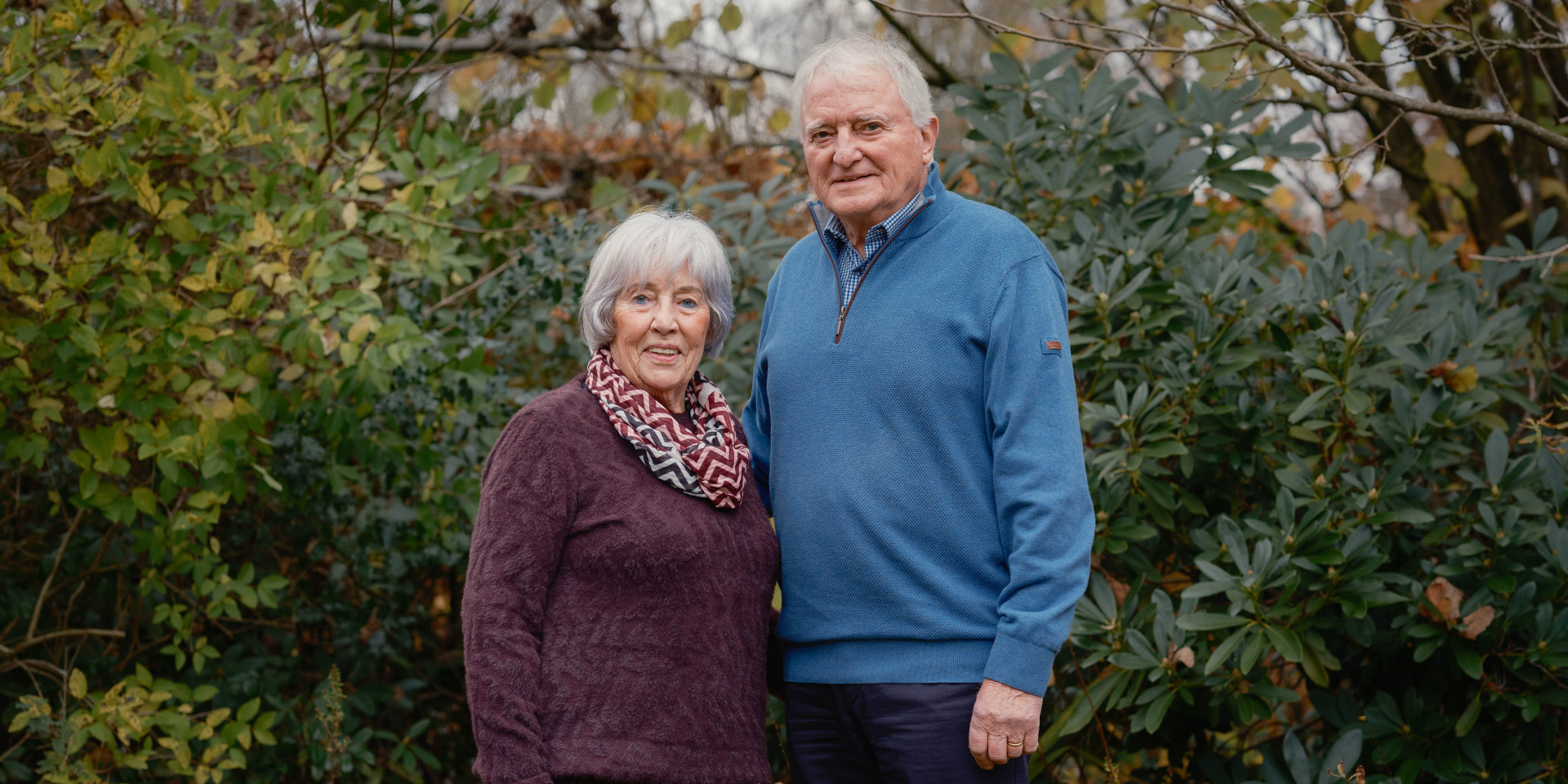
Behind every data point is a person like Joop, whose participation not only contributes to research but can also have a meaningful impact on their own life.